Series guide
All Super Smash Bros. games in order
By Lenn Hodes · founder — every cartridge tested by hand
Smash Bros. is Nintendo’s crossover fighting game: knock the others off the stage rather than empty a health bar, with a roster that grew from twelve Nintendo characters to guests from every corner of gaming. Below are all six releases in order, with what each one changed and the platforms linked — because those are the copies we stock and test.
The short answer
Super Smash Bros. (N64, 1999) → Melee (GameCube, 2001) → Brawl (Wii, 2008) → for Nintendo 3DS and for Wii U (2014) → Ultimate (Switch, 2018). No order is required. Playing: Ultimate has everyone. Collecting: Melee.
Tested Smash Bros. games in stock
N64, GameCube, Wii, 3DS, Wii U and Switch entries — every one play-tested on real hardware and listed exactly as it is, loose or boxed.
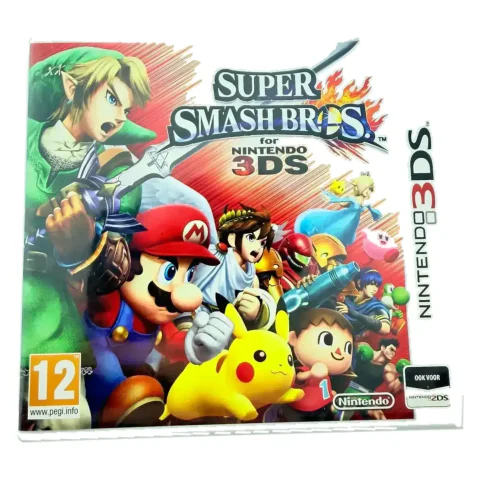
Super Smash Bros. for Nintendo 3DS
€29.95Personally tested
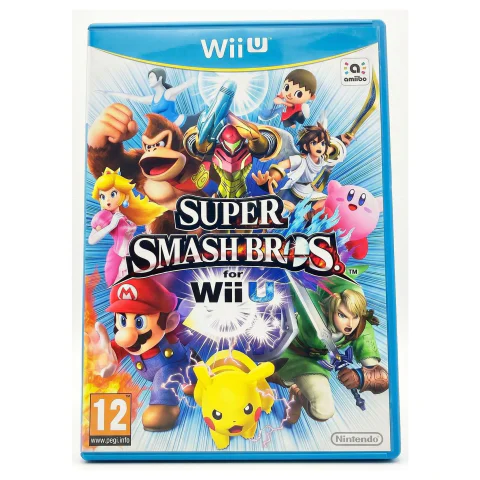
Super Smash Bros. for Wii U
€32.95Personally tested
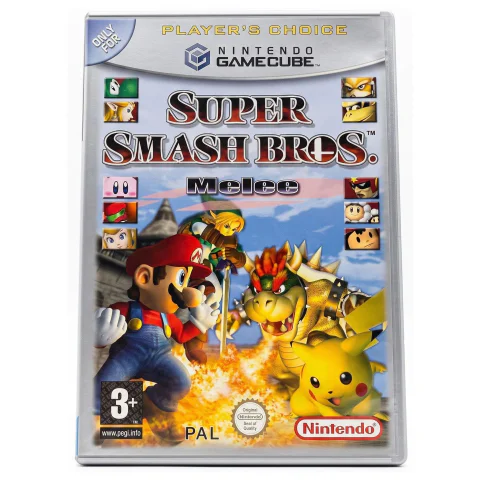
Super Smash Bros. Melee (Player's Choice)
€62.95Personally tested
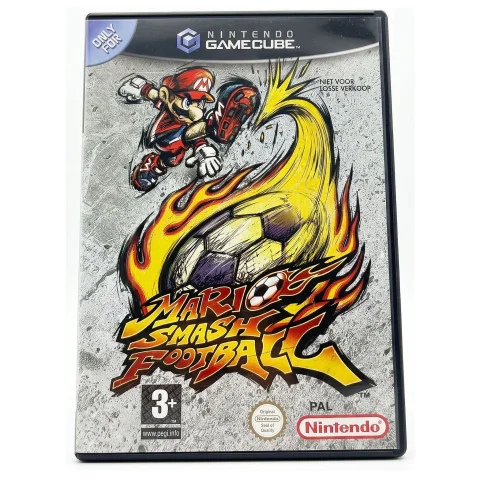
Mario Smash Football
€42.95Personally tested
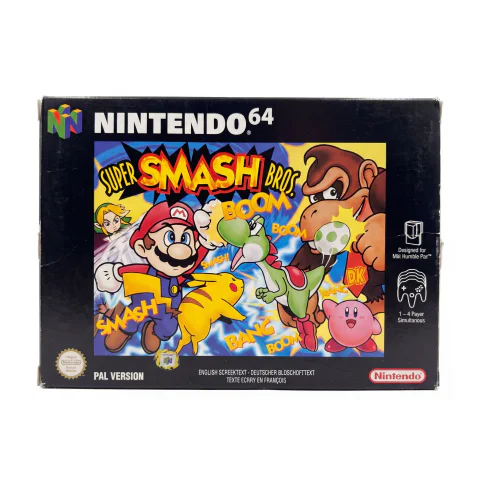
Super Smash Bros.
€161.95Personally tested Fair condition
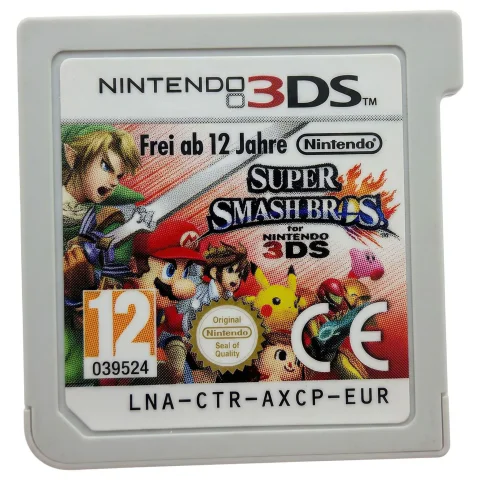
Super Smash Bros. for Nintendo 3DS
€25.95Personally tested
Every Smash Bros. game in order
Super Smash Bros.
€161.95Personally tested Fair condition
— twelve fighters, the idea in its purest form
Super Smash Bros. Melee
€62.95Personally tested Good condition
— the fast one — still played competitively
- Super Smash Bros. Brawl · 2008 · Wii — first with third-party guests (Sonic, Snake) and a story mode
Super Smash Bros. for Nintendo 3DS
€25.95Personally tested Good condition
— the first handheld entry
Super Smash Bros. for Wii U
€32.95Personally tested Good condition
— same roster as the 3DS game, different stages, eight-player matches
- Super Smash Bros. Ultimate · 2018 · Nintendo Switch — every fighter from every previous game, plus more
Do you have to play them in order?
No. There is no story to follow and each entry is complete on its own. What changes per generation is the pace and the roster: the N64 game is the idea in its purest form, Melee is the fast one, Brawl slowed things down and opened the door to guests, the Wii U game added eight-player matches, and Ultimate brought everyone back.
Which Smash Bros. should you buy now?
- Playing, today: Ultimate (Switch) — every fighter from every game, the biggest player base, and it plays on Switch 2 as well.
- The classic: Melee (GameCube) — the entry that never got replaced.
- On the sofa with a Wii: Brawl — plentiful, cheap, and the only one with a proper story mode.
- Handheld: Super Smash Bros. for Nintendo 3DS — the full roster in your pocket.
Buying Smash Bros. second-hand
Ultimate makes the older entries optional — except Melee
Ultimate contains every character from every previous Smash, so for playing it is the only one you need. Melee is the exception: its speed and mechanics were never repeated, which is why it still has its own tournament scene and why boxed GameCube copies are the collector target.
Brawl is a dual-layer disc
Brawl was one of the few dual-layer Wii discs, and a Wii with a dusty lens can struggle to read it even when other games run fine. Every copy we sell is play-tested from boot to a saved match on real hardware, so a listing here means the disc reads.
The N64 cartridge is region-locked and saves on a battery
The original keeps its records and unlocked fighters in memory powered by a coin cell inside the cartridge, and after twenty-five years some of those are flat — the game plays but forgets. The cell is replaceable, and we test the save on every copy. An American cartridge does not fit a European console without modification — our listings state the region.
3DS and Wii U are two games, not one
Sold separately in 2014 with the same roster but different stages and modes; the 3DS game is region-locked, so a European 3DS needs a European cartridge. Both support the amiibo figures that arrived with them.
Every copy tested before it is listed
Booting, a match, saving, label, disc surface — checked on real hardware. We have been doing this since 2019, with 1400+ verified reviews at 4.8★, and we ship tracked to all 27 EU countries. Originals only; if something ever turns out not to be genuine, you get your money back.
Browse tested Nintendo gamesQuestions we get asked
Do I need to play the Smash Bros. games in order?
No. There is no story to follow (Brawl’s Subspace Emissary is self-contained) and every entry stands on its own. Start with the one on your console.
Which Smash Bros. game should I start with?
Super Smash Bros. Ultimate on Switch: it contains every fighter from every previous game and has the largest player base. If you own a GameCube, Melee is the classic worth having on its own.
How many Smash Bros. games are there?
Five generations across six releases: the N64 original (1999), Melee (2001), Brawl (2008), the pair for 3DS and Wii U (2014) and Ultimate (2018).
Why is Melee still so popular?
Its speed and its movement techniques were never reproduced in a later entry, so a competitive scene grew around it and never left. That is also why GameCube copies hold their value.
Is Smash Bros. suitable for children?
The recent entries carry PEGI 12 for cartoon violence. It is a family game in practice — four players on one screen is the whole point.
Do you ship outside the Netherlands?
We ship to all 27 EU countries with track & trace. Parcels leave from the Netherlands, there are no customs charges within the EU, and your country’s exact rate appears at checkout before you pay.
Years given are the first release; European dates were sometimes a few months later. Dutch reader? Onze Smash Bros-collectie in het Nederlands.