Series guide
All Dragon Ball games in order
Dragon Ball games come in waves: the SNES fighters that only France and Spain got, the Budokai and Budokai Tenkaichi era on PS2, GameCube and Wii, the handheld RPGs on Game Boy Advance and DS, and the modern fighters from Xenoverse to Sparking! Zero. The names overlap — Tenkaichi is Sparking!, Goku Densetsu is Harukanaru Densetsu — which is why a list helps. Below are all forty Western releases in order, with the platforms linked — the SNES, Game Boy, GameCube, DS, Wii and Switch copies are the ones we stock and test — and buying notes for the second-hand copies.
The short answer
The SNES Butōden trilogy (1993–1994) → Final Bout (1997) → the GBA years and Budokai 1–3 (2002–2004) → Budokai Tenkaichi 1–3 (2005–2007) → the DS RPGs and Raging Blast (2008–2010) → Xenoverse 1–2 (2015–2016) → FighterZ (2018) → Kakarot (2020) → Sparking! Zero (2024). Start with FighterZ or Tenkaichi 3.
Every Dragon Ball game in order
- Dragon Ball Z: Super Butōden · 1993 · Super Nintendo — sold in France and Spain simply as Dragon Ball Z — the first Western release, years before the rest of Europe
- Dragon Ball Z 2: La Légende Saien · 1994 · Super Nintendo — Super Butōden 2 under its French title
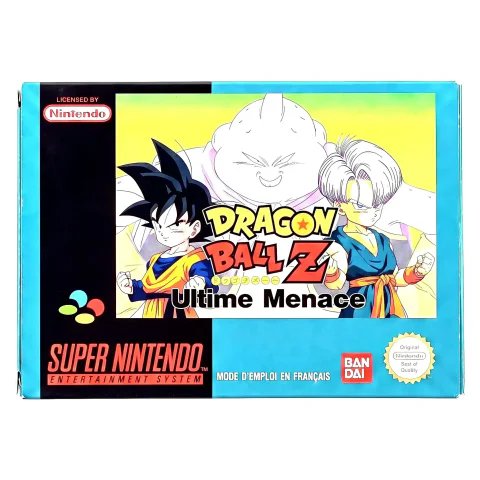
- Dragon Ball Z: Ultime Menace · 1994 · Super Nintendo — Super Butōden 3 under its French title; the rarest of the three
- Dragon Ball GT: Final Bout · 1997 · PlayStation — the first Dragon Ball game released across all of Europe and North America
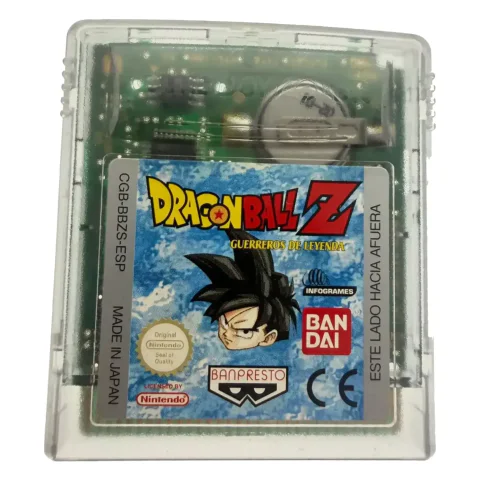
- Dragon Ball Z: Legendary Super Warriors · 2002 · Game Boy Color — a card-battle RPG; Guerreros de Leyenda on the Spanish box
- Dragon Ball Z: The Legacy of Goku · 2002 · Game Boy Advance — action RPG through the Saiyan and Namek sagas
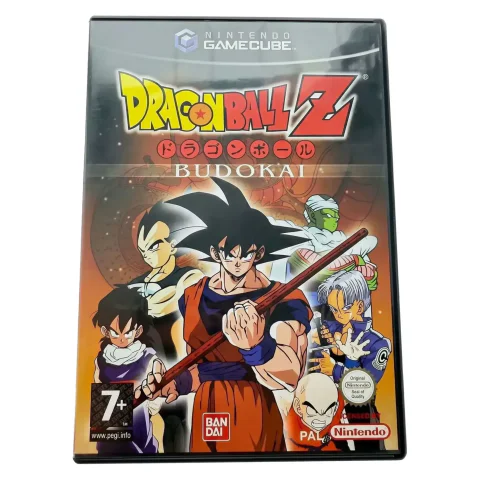
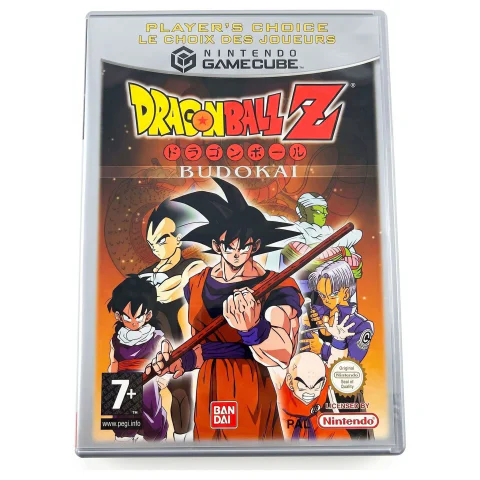
- Dragon Ball Z: Budokai · 2002 · PlayStation 2; GameCube 2003 — the fighter that started the modern era; the GameCube disc is the same game
- Dragon Ball Z: The Legacy of Goku II · 2003 · Game Boy Advance — the Android and Cell sagas, with more playable characters
- Dragon Ball Z: Taiketsu · 2003 · Game Boy Advance — the weakest of the GBA games — buy it for the collection, not the fights
- Dragon Ball Z: Budokai 2 · 2003 · PlayStation 2; GameCube 2004 — board-game story mode
- Dragon Ball Z: Supersonic Warriors · 2004 · Game Boy Advance — the best GBA fighter; team battles in the air
- Dragon Ball Z: Buu’s Fury · 2004 · Game Boy Advance — closes the Legacy of Goku trilogy with the Buu saga
- Dragon Ball Z: Budokai 3 · 2004 · PlayStation 2 — the fan favourite of the Budokai line; no GameCube version
- Dragon Ball GT: Transformation · 2005 · Game Boy Advance — a beat ’em up through the GT story
- Dragon Ball Z: Sagas · 2005 · PS2, GameCube & Xbox — the 3D action game — poorly received, and a cheap GameCube disc today
- Dragon Ball Z: Budokai Tenkaichi · 2005 · PlayStation 2 — Sparking! in Japan: the over-the-shoulder arena fighter begins
- Dragon Ball Z: Supersonic Warriors 2 · 2005 · Nintendo DS — the DS sequel, with three-on-three teams
- Dragon Ball Z: Budokai Tenkaichi 2 · 2006 · PlayStation 2; Wii 2007 — the Wii version adds motion controls for the Kamehameha
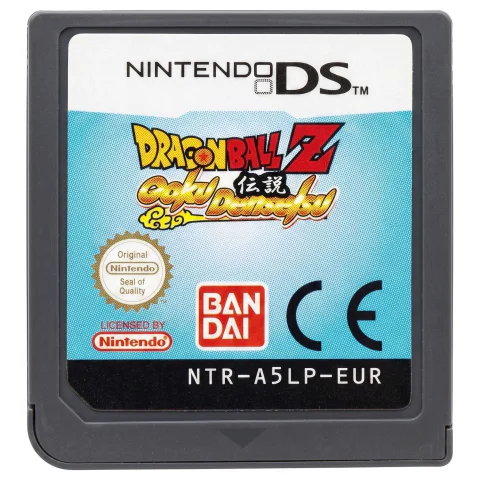
- Dragon Ball Z: Harukanaru Densetsu · 2007 · Nintendo DS — Goku Densetsu on the European box — a card-based RPG
- Dragon Ball Z: Budokai Tenkaichi 3 · 2007 · PlayStation 2 & Wii — Sparking! Meteor in Japan; 161 characters, the peak of the line
- Dragon Ball Z: Burst Limit · 2008 · PS3 & Xbox 360 — the first HD Dragon Ball fighter
- Dragon Ball: Origins · 2008 · Nintendo DS — the original Dragon Ball story, stylus-controlled
- Dragon Ball Z: Infinite World · 2008 · PlayStation 2 — the last Budokai-style game on PS2
- Dragon Ball Z: Attack of the Saiyans · 2009 · Nintendo DS — turn-based RPG by Monolith Soft — the DS game to own
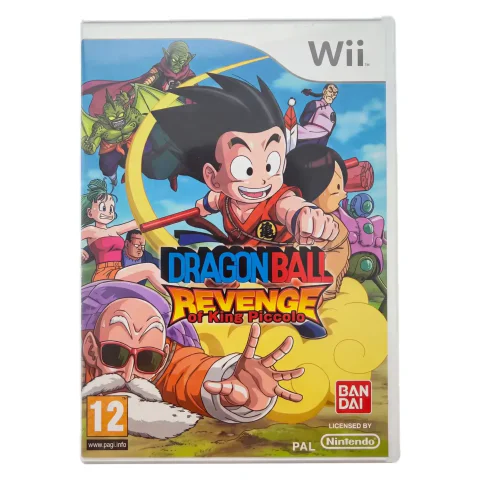
- Dragon Ball: Revenge of King Piccolo · 2009 · Wii — a 3D platformer through the King Piccolo saga
- Dragon Ball: Raging Blast · 2009 · PS3 & Xbox 360 — Tenkaichi in HD; Raging Blast 2 followed in 2010
- Dragon Ball: Origins 2 · 2010 · Nintendo DS — from the Red Ribbon Army to the Piccolo arc
- Dragon Ball Z: Tenkaichi Tag Team · 2010 · PSP — the handheld Tenkaichi
- Dragon Ball Z: Ultimate Tenkaichi · 2011 · PS3 & Xbox 360 — the first with a create-a-character
- Dragon Ball Z: Budokai HD Collection · 2012 · PS3 & Xbox 360 — Budokai 1 and 3 remastered
- Dragon Ball Z: Battle of Z · 2014 · PS3, Xbox 360 & Vita — four-player team battles
- Dragon Ball Xenoverse · 2015 · PS3, PS4, Xbox 360, Xbox One & PC — the time-patrol RPG-fighter begins
- Dragon Ball Z: Extreme Butōden · 2015 · Nintendo 3DS — Arc System Works’ 2D fighter, three years before FighterZ
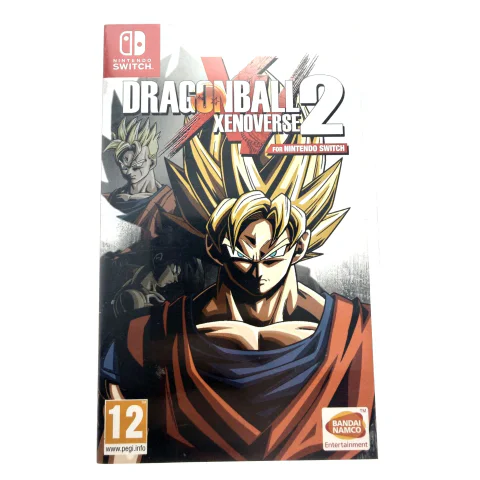
- Dragon Ball Xenoverse 2 · 2016 · PS4, Xbox One & PC; Switch 2017 — still updated a decade on; the Switch cartridge is region-free
- Dragon Ball Fusions · 2016 · Nintendo 3DS — the fusion RPG — Europe in 2017
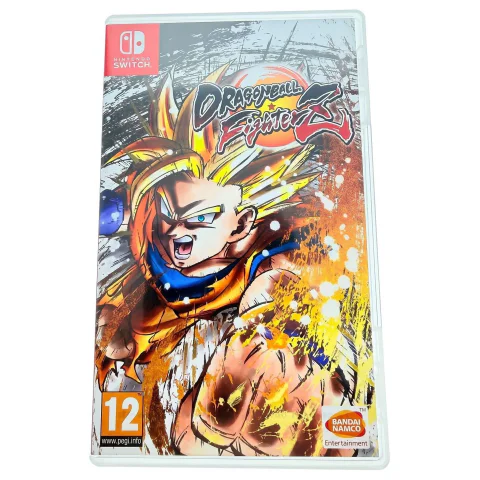
- Dragon Ball FighterZ · 2018 · PS4, Xbox One, PC & Switch — Arc System Works’ 2D fighter; the Switch version arrived the same year
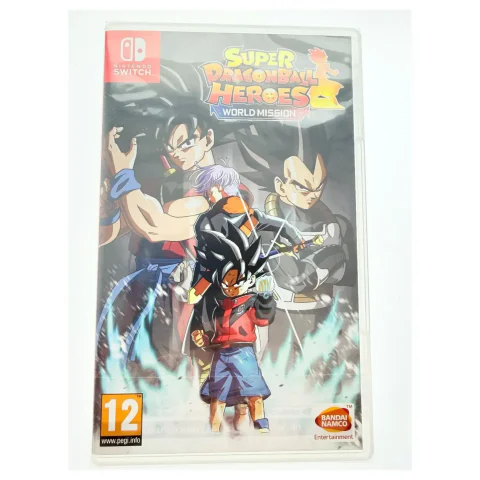
- Super Dragon Ball Heroes: World Mission · 2019 · Switch & PC — the arcade card game as a Switch cartridge
- Dragon Ball Z: Kakarot · 2020 · PS4, Xbox One & PC; Switch 2021 — the whole Z story as an action RPG
- Dragon Ball: The Breakers · 2022 · PS4, Xbox One, PC & Switch — the asymmetric online game; servers are the thing to check
- Dragon Ball: Sparking! Zero · 2024 · PS5, Xbox Series & PC; Switch and Switch 2 2025 — Budokai Tenkaichi 4 in all but name; on Nintendo since 14 November 2025
Do you have to play them in order?
No. Almost every Dragon Ball game starts the story again at the Saiyan saga, so the order that matters is not the games but the anime they retell. Two exceptions: The Legacy of Goku, Legacy of Goku II and Buu’s Fury on the GBA are one continuous run through Z, and Origins 1 and 2 on the DS cover the original Dragon Ball in sequence. The fighting games only grow: Tenkaichi 3 has more characters than 2, Sparking! Zero more than any of them.
Which Dragon Ball should you buy now?
- Fighting, on a Nintendo console: FighterZ on Switch, or Budokai Tenkaichi 3 on Wii for the arena style.
- An RPG: Attack of the Saiyans (DS) — turn-based, by Monolith Soft.
- Portable and cheap: Supersonic Warriors or The Legacy of Goku II on the Game Boy Advance; both fit a DS or DS Lite.
- The collector’s piece: Ultime Menace or La Légende Saien on the Super Nintendo — the French PAL cartridges.
Buying Dragon Ball second-hand
Goku Densetsu and Harukanaru Densetsu are one game
The DS card RPG was named Dragon Ball Z: Harukanaru Densetsu in North America and Goku Densetsu in Europe. Same cartridge, same game — a listing may use either name. The same goes for Ultime Menace (Super Butōden 3) and Guerreros de Leyenda (Legendary Super Warriors).
The SNES fighters were only released in France and Spain
Dragon Ball Z, La Légende Saien and Ultime Menace came out on PAL cartridges with French or Spanish boxes and were never sold elsewhere in Europe. They run on any PAL Super Nintendo; the in-game text is French or Spanish. They are the most expensive Dragon Ball cartridges, and reproductions exist — the label print and board are checked before a copy is listed here.
Budokai on GameCube is the PS2 game, and plays on an early Wii
Budokai and Budokai 2 came to GameCube a year after the PS2; Budokai 3 never did. The GameCube mini-discs run on the first Wii models with GameCube ports. Budokai Tenkaichi 2 and 3 on Wii are the PS2 games with motion controls, and Wii discs play on any Wii U.
The Switch cartridges are region-free and play on Switch 2
FighterZ, Xenoverse 2, Super Dragon Ball Heroes, Kakarot and The Breakers exist as physical Switch cartridges; all of them run on a Switch 2. Xenoverse 2 and The Breakers depend on servers for part of their content, so check what is playable offline before you buy for that alone.
Every copy tested before it is listed
Booting, gameplay, saving, disc and label condition — checked on real hardware. We have been doing this since 2019, with 1400+ verified reviews at 5.0★, and we ship tracked to all 27 EU countries. Originals only; if something ever turns out not to be genuine, you get your money back.
Browse tested gamesQuestions we get asked
Do I need to play the Dragon Ball games in order?
No. Nearly every game retells the same anime story from the start, so release order only matters within a trilogy: The Legacy of Goku I, II and Buu’s Fury follow the Z sagas in sequence, and Origins 1 and 2 follow the original Dragon Ball. For the fighters, later simply means bigger rosters.
How many Dragon Ball games are there?
Well over a hundred, counting Japan-only releases, mobile games and arcade machines. The forty above are the releases that reached Europe or North America and still matter for a collection.
What is the newest Dragon Ball game?
Dragon Ball: Sparking! Zero (October 2024 on PS5, Xbox Series and PC), which came to Nintendo Switch and Switch 2 on 14 November 2025. It is the successor to Budokai Tenkaichi 3 — Sparking! is the Japanese name of the Tenkaichi series.
Which Dragon Ball game is best on a Nintendo console?
Budokai Tenkaichi 3 on Wii for the arena fighting, FighterZ on Switch for the 2D fighting, and Attack of the Saiyans on DS for an RPG. Supersonic Warriors is the pick on Game Boy Advance.
Is Sparking! Zero the same as Budokai Tenkaichi 4?
In everything but the name. The Tenkaichi games are called Sparking! in Japan, and Sparking! Zero keeps that name worldwide. It is the fourth game in that line, seventeen years after Tenkaichi 3.
Do you ship outside the Netherlands?
We ship to all 27 EU countries with track & trace. Parcels leave from the Netherlands, there are no customs charges within the EU, and your country’s exact rate appears at checkout before you pay.
Years given are the first Western release; European titles where they differ. Onze Nintendo Switch-collectie in het Nederlands.