Series guide
All Mega Man games in order
Mega Man is not one series but seven that ran side by side: the Classic games, X, Zero, ZX, Legends, Battle Network and Star Force. That is why a release list jumps between a NES cartridge, a Game Boy game with a Roman numeral and a DS RPG in the same year. Below are all fifty releases in order, with the platforms linked — the NES, Game Boy and GBA cartridges are the ones we stock and test — and buying notes for the second-hand copies.
The short answer
Classic: Mega Man 1 (1987) to 6 (1993) on the NES, 7 (SNES), 8 (PlayStation), 9 and 10 (downloads), 11 (2018). Alongside them: the five Game Boy games (1991–1994), X1–X8 (1993–2004), Zero 1–4 (2002–2005), ZX (2006–2007), Legends (1997–2000), Battle Network 1–6 (2001–2006) and Star Force 1–3 (2006–2008). Start with Mega Man 2.
Every Mega Man game in order
- Mega Man · 1987 · NES — six Robot Masters and no password system — the hardest start in the series
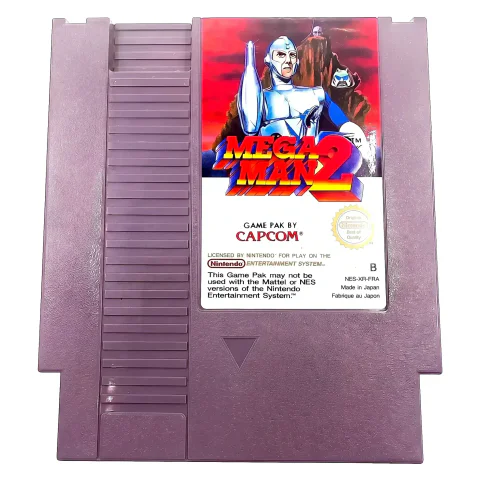
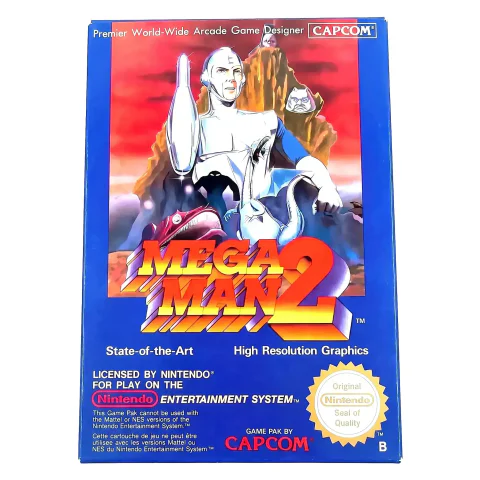
- Mega Man 2 · 1988 · NES — the fan favourite; Europe got its cartridge in 1990
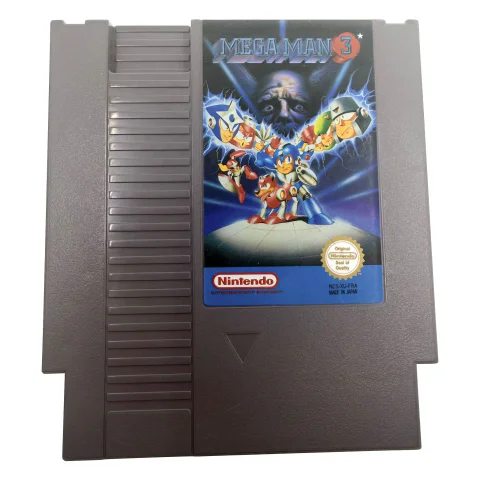
- Mega Man 3 · 1990 · NES — introduces Rush the dog and the slide
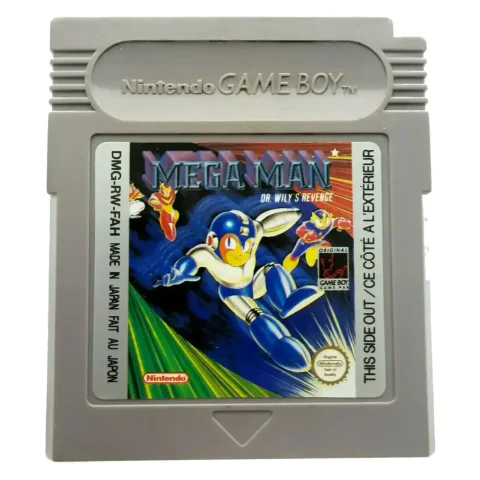
- Mega Man: Dr. Wily’s Revenge · 1991 · Game Boy — the first Game Boy game — its own levels, with bosses from 1 and 2
- Mega Man 4 · 1991 · NES — the charge shot arrives
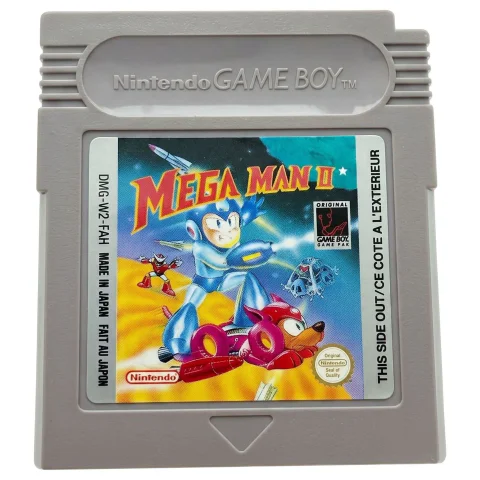
- Mega Man II · 1991 · Game Boy — Roman numerals mark the Game Boy line; bosses from 2 and 3
- Mega Man 5 · 1992 · NES — Beat the bird joins
- Mega Man III · 1992 · Game Boy — bosses from 3 and 4
- Mega Man 6 · 1993 · NES — the last NES game; never released on a PAL cartridge — see the buying notes
- Mega Man X · 1993 · Super Nintendo — the X series begins: Zero, the wall jump and armour parts
- Mega Man IV · 1993 · Game Boy — brings the charge shot to the Game Boy
- Mega Man X2 · 1994 · Super Nintendo — with the Cx4 chip for its wireframe bosses
- Mega Man V · 1994 · Game Boy — the only Game Boy game with all-new bosses, the Stardroids
- Mega Man 7 · 1995 · Super Nintendo — the only numbered Classic game on the SNES
- Mega Man X3 · 1995 · Super Nintendo — playable Zero; PlayStation and Saturn versions followed in Europe
- Mega Man 8 · 1996 · PlayStation & Saturn — the first Classic game with anime cutscenes
- Mega Man X4 · 1997 · PlayStation & Saturn — X or Zero from the start
- Mega Man Legends · 1997 · PlayStation — the 3D spin-off; the N64 version, Mega Man 64, never came to Europe
- Mega Man & Bass · 1998 · Super Famicom — Japan-only on the SNES; Europe got the GBA port in 2003
- The Misadventures of Tron Bonne · 1999 · PlayStation — the Legends side story
- Mega Man Legends 2 · 2000 · PlayStation — ends on a cliffhanger that Legends 3 never resolved
- Mega Man X5 · 2000 · PlayStation — written as the end of the X story
- Mega Man Xtreme · 2000 · Game Boy Color — X on a Game Boy Color; Xtreme 2 followed in 2001
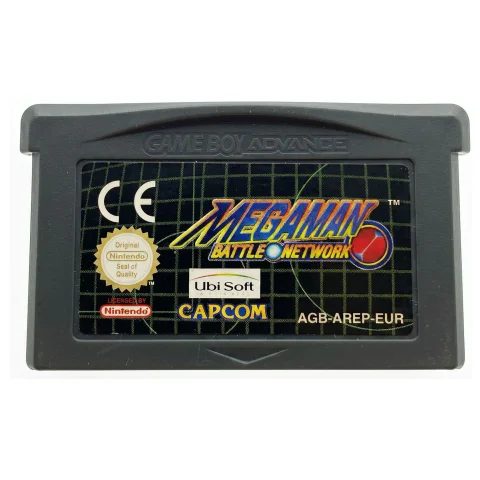
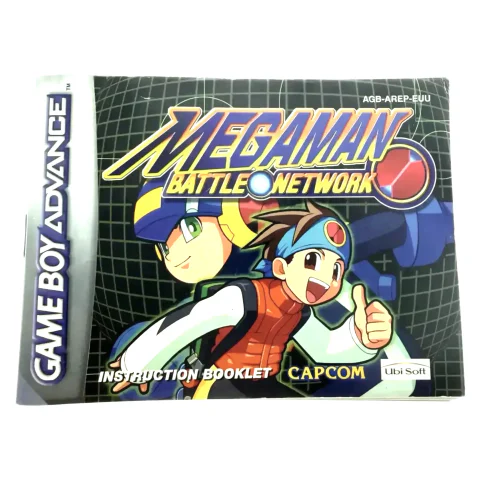
- Mega Man Battle Network · 2001 · Game Boy Advance — the grid-based RPG line begins, with MegaMan.EXE
- Mega Man X6 · 2001 · PlayStation — the sequel X5 was not supposed to have
- Mega Man Battle Network 2 · 2001 · Game Boy Advance — Europe in 2002; the first with a real chip economy
- Mega Man Zero · 2002 · Game Boy Advance — Zero’s own series: faster, harder, ranked
- Mega Man Battle Network 3 · 2002 · Game Boy Advance — Europe in 2003, as White and Blue
- Mega Man Zero 2 · 2003 · Game Boy Advance — adds the chain rod and form changes
- Mega Man X7 · 2003 · PlayStation 2 — the 3D experiment; Axl debuts
- Mega Man Network Transmission · 2003 · GameCube — Battle Network as a side-scroller, the only one on a home console
- Mega Man Battle Network 4 · 2003 · Game Boy Advance — Europe in 2004, as Red Sun and Blue Moon; Battle Chip Challenge came the same year
- Mega Man X8 · 2004 · PlayStation 2 — back to 2.5D; X: Command Mission (GameCube and PS2) was the RPG side step the same year
- Mega Man Zero 3 · 2004 · Game Boy Advance — the Zero game most fans start with
- Mega Man Battle Network 5 · 2004 · Game Boy Advance — Europe in 2005 as Team ProtoMan and Team Colonel; Double Team DS bundles both
- Mega Man Zero 4 · 2005 · Game Boy Advance — the end of the Zero story
- Mega Man Battle Network 6 · 2005 · Game Boy Advance — Europe in 2006, as Cybeast Gregar and Cybeast Falzar — the last GBA game
- Mega Man ZX · 2006 · Nintendo DS — the Zero sequel series, with Biometal forms
- Mega Man Star Force · 2006 · Nintendo DS — Europe in 2007; the Battle Network successor, three versions (Pegasus, Leo, Dragon)
- Mega Man ZX Advent · 2007 · Nintendo DS — the last new ZX game
- Mega Man Star Force 2 · 2007 · Nintendo DS — Europe in 2008, as Zerker × Ninja and Zerker × Saurian
- Mega Man 9 · 2008 · Wii, PS3 & Xbox 360 — back to 8-bit, download-only (WiiWare); Mega Man 10 followed in 2010
- Mega Man Star Force 3 · 2008 · Nintendo DS — Europe in 2009, as Black Ace and Red Joker; the last DS game
- Mega Man Legacy Collection · 2015 · PS4, Xbox One, PC; 3DS 2016, Switch 2018 — Mega Man 1–6 — the way Europe finally got Mega Man 6 on a cartridge
- Mega Man Legacy Collection 2 · 2017 · PS4, Xbox One, PC; Switch 2018 — Mega Man 7–10
- Mega Man 11 · 2018 · Switch, PS4, Xbox One & PC — the newest original Classic game; Double Gear system
- Mega Man X Legacy Collection 1 & 2 · 2018 · Switch, PS4, Xbox One & PC — X1–X4 and X5–X8
- Mega Man Zero/ZX Legacy Collection · 2020 · Switch, PS4, Xbox One & PC — all four Zero games and both ZX games
- Mega Man Battle Network Legacy Collection · 2023 · Switch, PS4 & PC — all ten GBA versions, with online battles
- Mega Man Star Force Legacy Collection · 2026 · Switch, PS4, PS5, Xbox & PC — released 27 March 2026 — all six DS versions
Do you have to play them in order?
Only inside a sub-series, and even there the games are self-contained. The timeline does run in one direction — Classic, then X a century later, then Zero, ZX and finally Legends — so playing the sub-series in that order reads the whole story. Battle Network and Star Force take place in a different universe where Dr. Light built a network instead of robots; their six-plus-three games are the only ones with a plot that carries over from one cartridge to the next.
Which Mega Man should you buy now?
- The classic, on original hardware: Mega Man 2 or 3 on a PAL NES cartridge — tested, and checked against the reproductions.
- Portable and cheap: Dr. Wily’s Revenge or Mega Man II on the Game Boy — original games, not ports.
- The RPG line: Mega Man Battle Network on the GBA, or the Battle Network Legacy Collection on Switch for all ten versions.
- Everything in one place: the Legacy Collections on Switch — Classic, X, Zero/ZX, Battle Network and now Star Force — on region-free cartridges.
Buying Mega Man second-hand
The Game Boy games are not ports
Dr. Wily’s Revenge and Mega Man II to V are five original games with their own stages. They reuse Robot Masters from the NES games — I takes bosses from 1 and 2, II from 2 and 3, and so on — which is why a Game Boy cartridge called "Mega Man II" is not the NES Mega Man 2. Mega Man V is the odd one out, with all-new Stardroid bosses.
Mega Man 6 was never sold on a PAL cartridge
Capcom released 1 to 5 in Europe, but Mega Man 6 only came out in Japan and North America on the NES. A PAL Mega Man 6 cartridge offered as original is a reproduction. The Legacy Collection (3DS, Switch, PS4) is the way to own it here.
Battle Network comes in version pairs
From Battle Network 3 onwards every game has two versions — White/Blue, Red Sun/Blue Moon, Team ProtoMan/Team Colonel, Cybeast Gregar/Cybeast Falzar — with the same story and different chips and bosses. The cartridges are Game Boy Advance and also fit the second slot of a DS or DS Lite; they use a save battery, which we check.
NES Mega Man cartridges are heavily reproduced
Mega Man 2 and 3 are among the most copied NES games. Label print, the cartridge shell and the board are checked before a copy is listed here, and every cartridge is booted on the console itself. A boxed PAL Mega Man 2 sells for a lot more than a loose one — the listings say which you get.
Every copy tested before it is listed
Booting, gameplay, saving, label and board — checked on real hardware. We have been doing this since 2019, with 1400+ verified reviews at 5.0★, and we ship tracked to all 27 EU countries. Originals only; if something ever turns out not to be genuine, you get your money back.
Browse tested gamesQuestions we get asked
Do I need to play the Mega Man games in order?
Within a sub-series, release order is the story order: Classic 1–11, then X, then Zero, then ZX follow each other in the game’s own timeline, and Legends is set long after. Battle Network and Star Force are a separate universe with its own order. Across sub-series you can start anywhere.
How many Mega Man games are there?
Counting ports, spin-offs and mobile games, well over a hundred. The list above holds the fifty releases that matter for a collection: every main entry of the seven sub-series plus the Legacy Collections that bundle them.
What is the newest Mega Man game?
Mega Man 11 (2018) is the newest original game. The newest release is the Mega Man Star Force Legacy Collection of 27 March 2026. A new Classic game, Mega Man: Dual Override, has been announced for 2027.
Is Rockman the same as Mega Man?
Yes. Rockman is the Japanese name; every Rockman game is a Mega Man game. Japanese cartridges run on a Japanese console (or a Super Famicom), not on a PAL NES or SNES without an adapter.
Which Mega Man should I start with?
Mega Man 2 for the classic feel, Mega Man 11 if you want a modern one, Mega Man X for the SNES line. For Battle Network, start at 3 or take the Legacy Collection on Switch and play them in order.
Do you ship outside the Netherlands?
We ship to all 27 EU countries with track & trace. Parcels leave from the Netherlands, there are no customs charges within the EU, and your country’s exact rate appears at checkout before you pay.
Years given are the first release; European dates and titles where they differ. Onze NES-collectie in het Nederlands.