Platform guide
All Mario GBA games
Fourteen Mario cartridges came out for the Game Boy Advance in Europe between 2001 and 2005: four ports of the SNES and NES classics, two role-playing games, two sports RPGs, a kart racer, a pinball game and two plain NES re-releases. Three of them carry a different name here than in America — including one that shares its European name with a GameCube game.
The short answer
Super Mario Advance and Mario Kart: Super Circuit (2001) → Super Mario Advance 2 and 3 (2002) → Advance 4 and Superstar Saga (2003) → Mario Golf: Advance Tour, Mario vs. Donkey Kong, NES Classics: Super Mario Bros. and Super Mario Ball (2004) → NES Classics: Dr. Mario, Yoshi’s Universal Gravitation, Mario Power Tennis and Mario Party Advance (2005). Start with Super Mario Advance 2.
Every Mario GBA cartridge, in release order
| Game (European title) | Year (EU) | What it is |
|---|---|---|
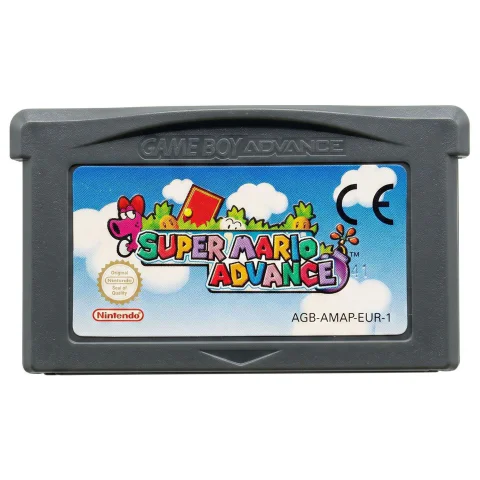
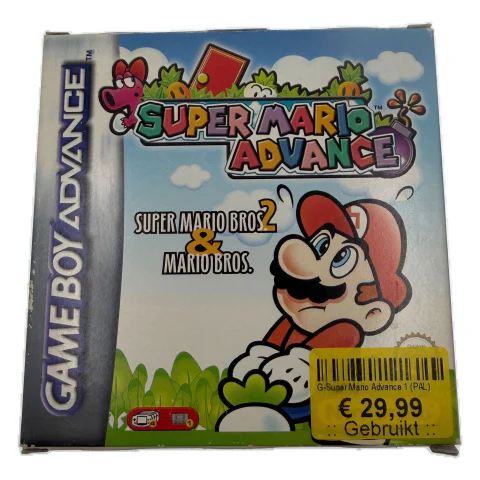
| Super Mario Advance | 2001 | Port of Super Mario Bros. 2 + Mario Bros. |
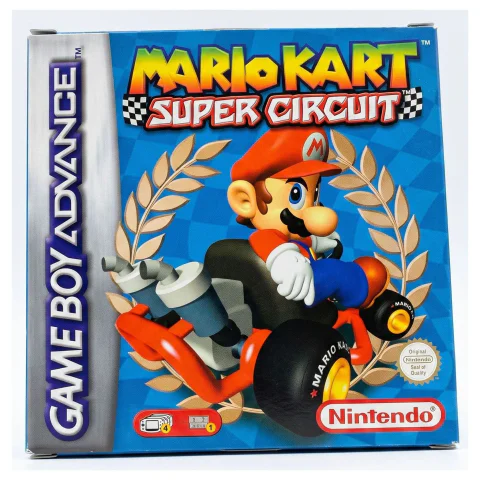
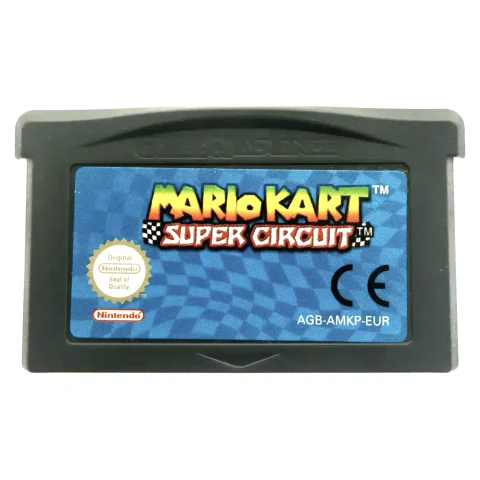
| Mario Kart: Super Circuit | 2001 | Racing |
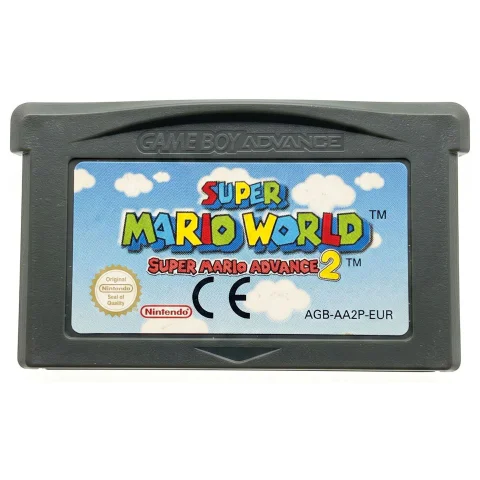
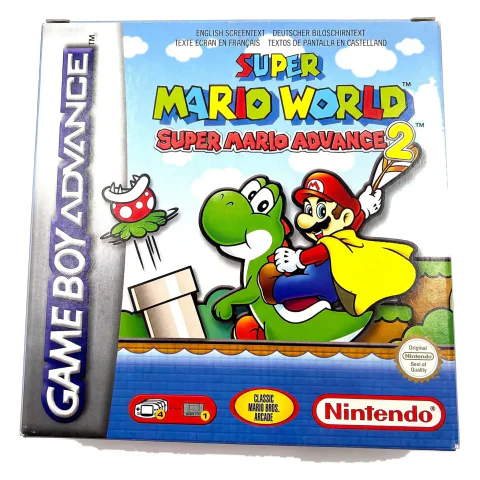
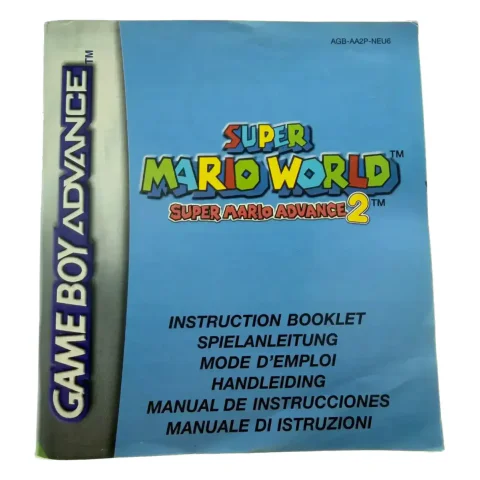
| Super Mario World: Super Mario Advance 2 | 2002 | Port of the 1990 SNES game |
| Yoshi's Island: Super Mario Advance 3 | 2002 | Port of Super Mario World 2 |
| Super Mario Advance 4: Super Mario Bros. 3 | 2003 | Port of the 1988 NES game |
| Mario & Luigi: Superstar Saga | 2003 | RPG — first in the series |
| Mario Golf: Advance Tour | 2004 | Sports RPG |
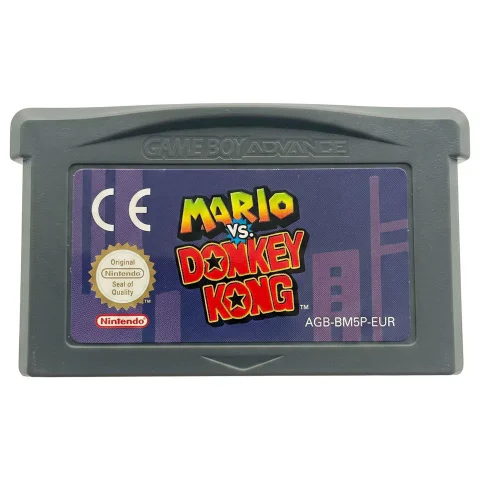
| Mario vs. Donkey Kong | 2004 | Puzzle-platformer |
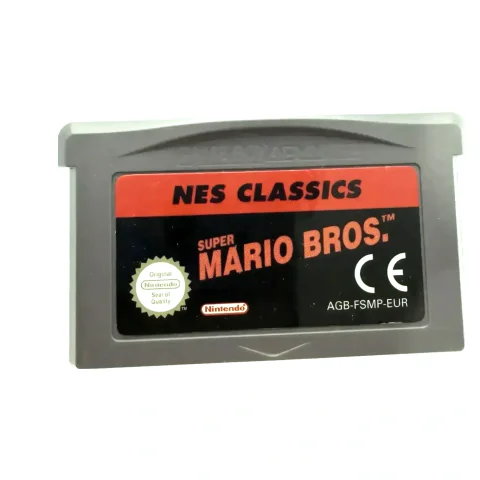
| NES Classics: Super Mario Bros. | 2004 | NES re-release |
| Super Mario Ball | 2004 | Pinball |
| NES Classics: Dr. Mario | 2005 | NES re-release |
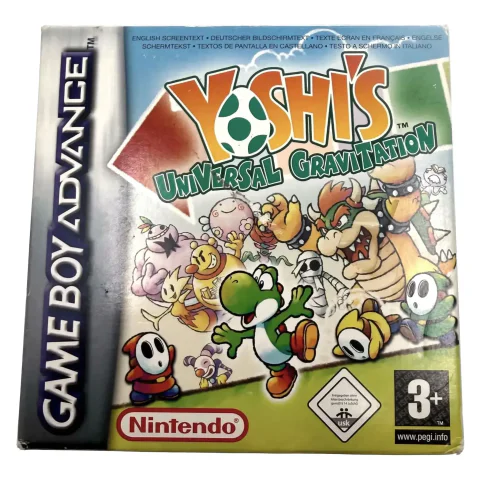
| Yoshi's Universal Gravitation | 2005 | Tilt-controlled platformer |
| Mario Power Tennis | 2005 | Sports RPG |
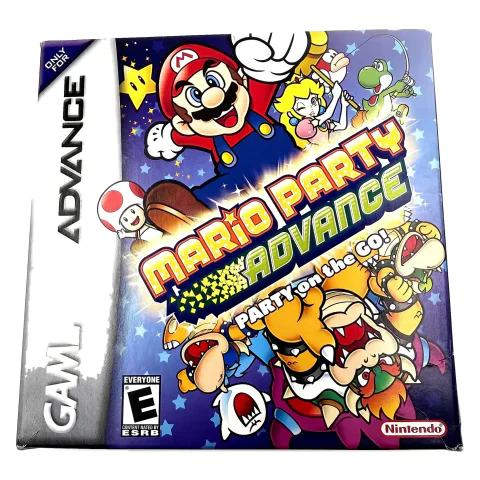
| Mario Party Advance | 2005 | Party — single-player board |
Game by game — the buying notes
Super Mario Advance (2001)
A European Game Boy Advance launch title, and the odd one of the four Advance ports: it is Super Mario Bros. 2 — the one with the vegetables, four playable characters and no Bowser — plus the arcade Mario Bros. as a multiplayer extra. Voices were added, which people either remember fondly or not at all.
Mario Kart: Super Circuit (2001)
Twenty new tracks plus all twenty from Super Mario Kart on the SNES, which makes forty in a cartridge the size of a stamp. Still the only handheld Mario Kart with the SNES-style flat road, and the one that made single-cartridge multiplayer normal.
Super Mario World: Super Mario Advance 2 (2002)
Super Mario World with Luigi playable from the start and a save system that keeps every level. The screen is cropped compared to the SNES, which is the trade-off for having it in a pocket. The most common Mario cartridge on the system and usually the cheapest.
Yoshi's Island: Super Mario Advance 3 (2002)
The 1995 SNES game with six extra levels, and the port that survives the transfer best — the crayon art was never dependent on screen size. If you want one Advance port, this is the one that still feels new.
Super Mario Advance 4: Super Mario Bros. 3 (2003)
Super Mario Bros. 3 with the e-Reader levels attached — cards Europe never got, so the European cartridge has the base game only. Scarcer and pricier than Advance 2 or 3, partly because collectors chase the complete set of four.
Mario & Luigi: Superstar Saga (2003)
The game that started the Mario & Luigi line: one button per brother, timed hits, and a script that is genuinely funny. Later remade on the 3DS, but the GBA original is the one with the sprite work people still copy.
Mario Golf: Advance Tour (2004)
Half golf game, half role-playing game — you make a character, level up their stats and work through a club. Camelot did the same trick with tennis. The RPG half is why it holds up; the golf on its own would not have.
Mario vs. Donkey Kong (2004)
A direct descendant of Donkey Kong on the Game Boy: reach the key, then reach the Mini Mario, in a hundred short puzzle levels. The start of a series that ran to the Switch, and the last one where you actually play as Mario the whole way.
NES Classics: Super Mario Bros. (2004)
The 1985 original, unaltered, in a plain white box. In Europe the line is branded NES Classics — the same cartridge is Classic NES Series in America and Famicom Mini in Japan, so an American listing will not match a European one. Twelve titles came out here in two waves.
Super Mario Ball (2004)
Sold as Mario Pinball Land in America; the European cartridge says Super Mario Ball. Mario is the ball, the flippers are yours, and progress is a board-to-board journey rather than a high score. Short, strange, and cheap.
NES Classics: Dr. Mario (2005)
The 1990 puzzler as it was, from the second European NES Classics wave in January 2005. Scarcer than the Super Mario Bros. cartridge from the first wave, and the pill-matching still works better than it has any right to.
Yoshi's Universal Gravitation (2005)
Called Yoshi Topsy-Turvy in America. The cartridge has a tilt sensor inside, so you steer by turning the console — which means it is heavier than a normal GBA cartridge and will not work properly lying flat on a table. A genuine copy is noticeably chunky; that weight is itself an authenticity check.
Mario Power Tennis (2005)
Careful here: in Europe this GBA cartridge carries the same name as the 2004 GameCube game, which is a different game entirely. America called it Mario Tennis: Power Tour and Japan Mario Tennis Advance. It is the tennis counterpart to Mario Golf: Advance Tour — a full RPG with a tennis academy — and worth far more than its box suggests.
Mario Party Advance (2005)
The Mario Party that is barely a party game: the board is a single-player quest and the minigames are unlocked one at a time. Multiplayer is limited to passing one console around. Cheap, and the one Mario Party to buy last.
The three European titles that catch buyers out
- Super Mario Ball is the European name for Mario Pinball Land. Same cartridge, same year, different box.
- Yoshi’s Universal Gravitation is Yoshi Topsy-Turvy in America. This one has a tilt sensor built into the cartridge, so a real copy is visibly thicker and heavier than a normal GBA cartridge.
- Mario Power Tennis is the biggest trap: in Europe the GBA game and the 2004 GameCube game share that name, but they are entirely different games. America called the handheld one Mario Tennis: Power Tour. Check the platform on the listing, not the title.
Or buy one that has already been checked
Game Boy Advance is the most counterfeited generation there is, so every cartridge we sell is opened, weighed and checked against the board code before it is listed, then play-tested and saved to on real hardware. We have been doing this since 2019, with 1400+ verified reviews at 5.0★, and we ship tracked to all 27 EU countries.
See how we check a GBA cartridgeQuestions we get asked
How many Mario games are there on the Game Boy Advance?
Fourteen cartridges in Europe, from Super Mario Advance at the 2001 launch to Mario Party Advance in 2005. That includes the four Super Mario Advance ports, the two NES Classics re-releases, the Yoshi games and the sports RPGs. It leaves out Game & Watch Gallery 4, which is a Game & Watch collection rather than a Mario game, the WarioWare series, which is its own thing, and the e-Reader cards, which never came to Europe.
Which Mario GBA game should I buy first?
Super Mario World: Super Mario Advance 2 for the platformer — it is the best-known, the most common and usually the cheapest. Mario & Luigi: Superstar Saga if you want something long, and Mario Kart: Super Circuit if two of you are playing. Yoshi’s Island: Super Mario Advance 3 is the port that has aged best.
Why do some Mario GBA games have different names in Europe?
Three of them do, and it catches buyers out. Mario Pinball Land is Super Mario Ball here, Yoshi Topsy-Turvy is Yoshi’s Universal Gravitation, and Mario Tennis: Power Tour is Mario Power Tennis — which is also the name of the 2004 GameCube game, a different game on different hardware. The NES Classics line is called Classic NES Series in America. If you are comparing against an American list, match the year and the platform, not the title.
Do Game Boy Advance Mario games have a save battery?
No. They use flash or EEPROM, which holds a save without power, so a twenty-year-old cartridge still saves. The coin cell people ask about is in Pokémon Ruby, Sapphire and Emerald, and even there it runs the in-game clock, not the save. Where saves genuinely die is on Game Boy and Game Boy Color cartridges — a different generation.
Which consoles play GBA cartridges?
Every Game Boy Advance model — the original, the SP and the Game Boy Micro — plus the first Nintendo DS and the DS Lite, which both have a GBA slot on the bottom. The DSi, DSi XL, 3DS, 2DS and Switch do not have that slot and cannot play them at all.
Are GBA cartridges region-locked?
No. A European cartridge plays on an American or Japanese Game Boy Advance and the other way round. The difference is the language on the cartridge and the box. Everything we sell is the European version unless the product page says otherwise.
Do you ship Mario GBA games across the EU?
Yes — tracked shipping from the Netherlands to all 27 EU countries, no customs charges inside the EU, and 30 days to return an order. Your country’s exact rate appears at checkout before you pay.
One console up: all Mario DS games, two up: all Mario 3DS games — or the whole series in order. Same cartridge slot, different franchise: all Pokémon GBA games and all Zelda GBA games.
Dutch reader? Game Boy Advance-games — het hele aanbod in het Nederlands.