Gameshop Verified · 6-point check · Cyprus
Every cartridge checked 6 times
A Nintendo cartridge is genuine when it meets six criteria: the right screw and shell (tri-wing on GBA, 3.8 mm gamebit on GB/GBC/NES/SNES/N64; glued on DS/3DS), a semi-matte label in the right colour, the correct weight (GBA 10-13 g · DS 3.6-4.1 g), a dark-green circuit board with the “(c) Nintendo” print, a working save and glitch-free behaviour in game on original hardware. If one check fails, the cartridge is a reproduction. Before a cartridge enters our shop it goes through this internal 6-point authenticity check — reproduction or defect: rejected; authentic and working: only then for sale. That is our promise, based on 7 years of checking Nintendo fakes since 2019.
Tracked to Cyprus, prices in euros
Quick answer · How do I spot fake Nintendo cartridges?
- What are the six checks you do?
- (1) The screw and the shell: Game Boy and Color are closed with a 3.8 mm gamebit, Advance with a three-pointed tri-wing, so a cross-head screw is suspicious. DS and 3DS cards, on the other hand, are glued — if there is a screw, something is wrong. (2) Label and print: sharp printing, the golden Nintendo seal in its place, and the colour of the cartridge that belongs to the game (Emerald green, Ruby red). (3) The weight on a precision scale: a Game Boy cartridge weighs 18 to 24 grams, a GBA cartridge 10 to 13 and a DS card 3.6 to 4.1 — fakes with thinner plastic or a lighter circuit board weigh noticeably less. (4) The product code on the circuit board, which has its own prefix per system. (5) Booting on real hardware, all the way to the title screen. (6) The save function: save a game, switch the console off, and see whether it is still there.
- Which Nintendo cartridges are faked most?
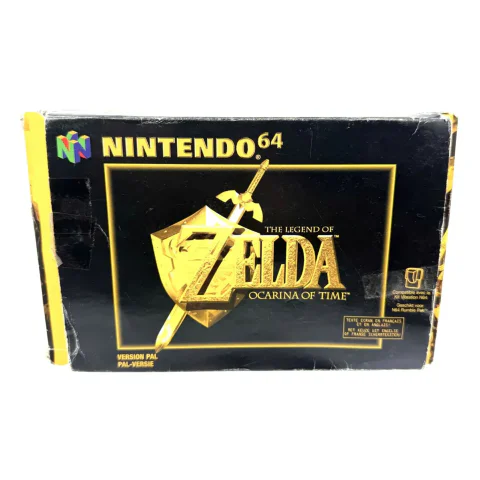
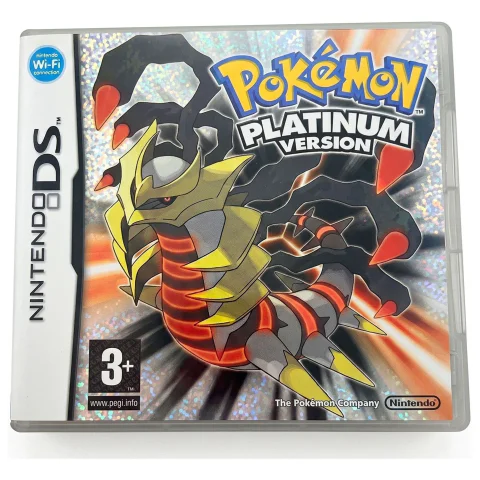
- The Pokémon titles for the Game Boy Advance top the list — Ruby, Sapphire, Emerald, FireRed and LeafGreen — followed by Gold, Silver and Crystal on the Game Boy Color and HeartGold and SoulSilver on the DS. The golden Zelda cartridges for the Nintendo 64 and Mario Party 3 are popular with counterfeiters too. On the 3DS and the Switch the protection sits in the chip itself; there we see far fewer fakes.
- How can I be sure a cartridge from Gameshop Enter is genuine?
- Every cartridge goes through all six checks above before it enters the shop, and if it fails one of them, it does not go in. On top of that you have 30 days to return it — without having to explain why.
6
checks per cartridge
100%
tested before sale
~12%
rejected as fake
1400+
reviews 4.8★ · verified buyers
7
years of experience, since 2019
30
days return guarantee
The 6-point check
One check fails · rejected
Screw / shell check
Game Boy, GBC, NES, SNES and N64 cartridges open with a 3.8 mm gamebit; GBA cartridges have a Y-shaped three-pointed tri-wing screw — an ordinary Phillips screw (+) means instant rejection. Exception: the very first NES cartridges are closed with five cross-head screws. DS and 3DS game cards are glued and clicked shut and have no screw; a screw there is actually suspicious. For Switch cartridges we check the bitter coating (Nintendo’s official anti-counterfeit measure).
Label & print quality
Semi-matte print with fine dot-matrix patterns. The label colour must match a known original exactly — on fakes the shade is often slightly off (the deep green of Pokémon Emerald, for example). A stamped 2-digit batch number. Pixelation, gloss or a dull finish = fake.
Cartridge weight
An original Game Boy cartridge weighs 18-24 g, a GBA cartridge 10-13 g and a DS card 3.6-4.1 g (measured ranges, depending on the circuit board). We weigh on a digital precision scale and compare with our own range per platform. Noticeably lighter = probably a fake with thinner plastic or a lighter circuit board.
Circuit-board code + Nintendo print
GB/GBC: open the cartridge with a 3.8 mm gamebit, GBA: with a tri-wing. DS: check the back for the moulded “NTR-005 PAT.PEND” and the Nintendo logo (no tri-wing needed). A dark-green circuit board with “(c) Nintendo” and a game-specific prefix code (AGB-BPEP-EUR for the European Pokémon Emerald, NTR-IPKE-USA for the American HeartGold, CGB-BYTP-EUR for Crystal). Wrong board colour or no Nintendo print = fake.
Save test (battery or flash)
Save, switch the console off, wait 30 seconds, load the save. On Game Boy and GBC (CR2025 coin cell) the save depends on that battery; most GBA games store the save on flash — only early SRAM titles such as Wario Land 4 still have a CR1616 for the save, and in Ruby, Sapphire and Emerald that coin cell only powers the clock — all tested. DS and 3DS save on flash, the Switch on the console. Corrupt save or crash = fake.
In-game test on original hardware
No emulator: every cartridge is played for at least 10 minutes on an authentic Nintendo console (Game Boy, GBA SP, DS Lite, 3DS, Switch). For HeartGold/SoulSilver: a Pokéwalker pairing test. For Switch: an eShop sync test. Glitch, freeze or crash = rejected.
Guarantee — because we are sure of our check
30 days full return
Longer than the statutory 14 days. Not satisfied? Send it back, no questions asked. Return costs are yours; if it turns out to be a defect or a fake, we pay them.
12-month working guarantee
On top of the 2-year statutory conformity guarantee. Save battery defective within 12 months? Free replacement. Game does not work? Money back or a replacement.
Lifetime authentication
If a cartridge we sold turns out to be a reproduction: a full refund, forever. Not just within a certain period.
Personal support
Doubts about a cartridge? Send a photo and we take a personal look — real contact with the people who test every game themselves.
Have your own cartridge checked?
For €15, return shipping within the Netherlands included, we check a cartridge you bought elsewhere. You get an official certificate with photos of all 6 checks. Handy for valuable second-hand purchases, on Vinted for example. Sending from another EU country? Ask us first — the return shipping depends on your country.
In short, without the jargon
Maybe you read terms like “circuit board” or “product code” above and think: nice, but what does that do for me? Very simply: it comes down to us taking every game in our own hands and trying it on a real Nintendo console before it enters the shop. If it does not work properly, or something about the cartridge is not right, we do not sell it. Full stop.
So you do not have to be an expert. You do not need to know how to spot a fake game, because we have already done that for you. Buy something from us and you get an original, working game — tested by a real person, not by a machine. And should you still have doubts once it arrives: you have 30 days to send it back without hassle.
Buying somewhere else, on Vinted for example? Then send the game to us. For €15 we check it for you and send it back with a clear report. That way you know for sure you are not paying for a fake.
Frequently asked questions about authenticity
What happens if I receive a counterfeit cartridge?
That does not happen with us — every cartridge goes through the 6-point check before it goes online. Should something still be wrong against all expectations: you have 30 days full right of return plus a 12-month working guarantee, and we pay the return costs.
How many cartridges do you reject?
About 12% of the games we buy in, we reject as fake or because they do not work properly. For frequently copied titles such as Pokémon Emerald or Mario Kart DS that is higher (around 20-25%), simply because they are faked most often.
Can you check a cartridge I already own?
Yes. For €15 (return shipping within the Netherlands included) we check your cartridge for authenticity and function. You send it to us and get a clear report back. Handy if you bought something second-hand outside Gameshop Enter and want to know for sure that it is original. From another EU country, ask us first about the return shipping.
Do you do this for sealed items too?
Yes, sealed items get extra attention: we check whether the box has been resealed, whether the seal is undamaged and whether everything matches a known original copy. A genuinely sealed item is never opened for the check — it stays closed.
What if the save battery runs flat later?
The battery that keeps your progress usually lasts 10 to 20 years. If it runs flat within 12 months of purchase, we replace it for free. After that it remains replaceable — it is soldering work, feel free to ask us. We test every battery before sale, so you are not in for surprises.
Which Nintendo games are faked most often?
Pokémon cartridges for the Game Boy, Game Boy Advance and Nintendo DS are faked most in Europe — think Pokémon Emerald, FireRed/LeafGreen, HeartGold/SoulSilver and Crystal, and Mario Kart DS. On the Nintendo Switch fakes hardly occur: those cartridges are technically more complex and have a layer of bitter substance on the outside (so small children do not chew on them). That makes fakes on Switch rare.
What is a product code on the circuit board and why do you check it?
On the circuit board inside the cartridge there is a short code that starts differently per system: NTR for the Nintendo DS, AGB for the Game Boy Advance, CGB for the Game Boy Color, DMG for the original Game Boy and CTR for the 3DS. Fake cartridges often lack that code, or have the wrong one. If we are in doubt, we open the cartridge to check.
Doubts about a cartridge you already own?
Describe it in a message — a photo is welcome. You get a personal answer.
More tested games in stock
Our pick from the shelf — every copy tested on real hardware and listed exactly as it is.