
Buying guide
Pokémon Gold, Silver & Crystal — buying the Johto originals
By Lenn Hodes · founder — every cartridge tested by hand
Generation 2 is Johto: Gold and Silver (Japan 1999, Europe 2001) and the expanded Crystal (Japan 2000, Europe late 2001), all on Game Boy Color. Three cartridges that many still call the best Pokémon games ever made — and the generation where one question decides a good buy from a bad one: does it still save?
The short answer
Playing Johto once: Crystal, the complete version. Playing it for less: Gold or Silver, which differ only in a few Pokémon and the legendary on the cover. Whichever you pick, these cartridges keep their save on an internal battery — flat means no saving, so buy one that has been tested, or budget for a new cell.
Johto cartridges in stock right now
Save tested on real hardware, battery status stated. They reach us one at a time — every unit is a one-off.
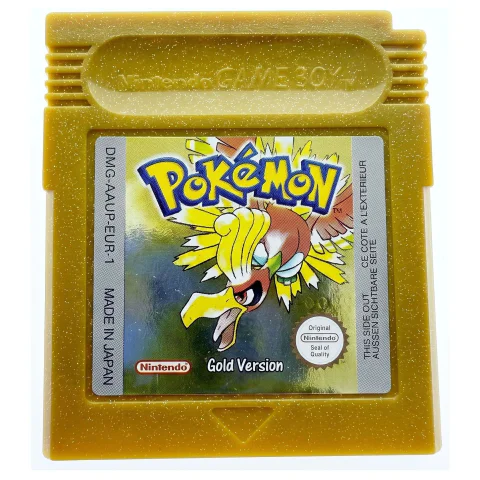 3 conditions
 Pokemon Gold
€94.95Personally tested
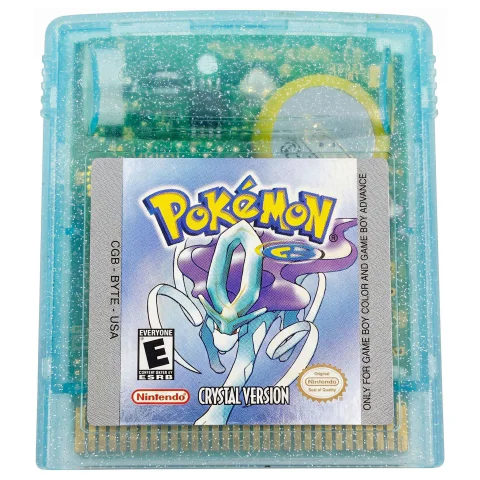 3 conditions
 Pokemon Crystal
€209.95Personally tested
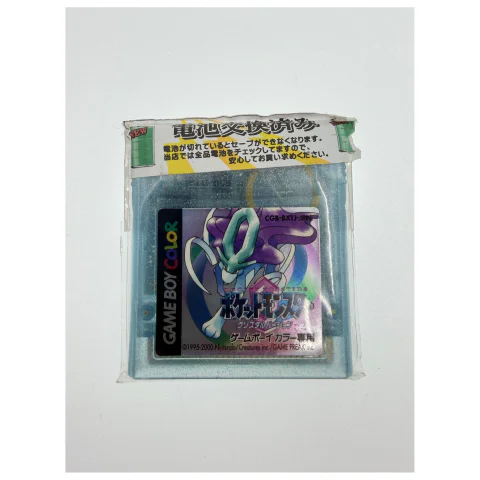
Pokemon Crystal (Japanese edition)
€89.95Personally tested
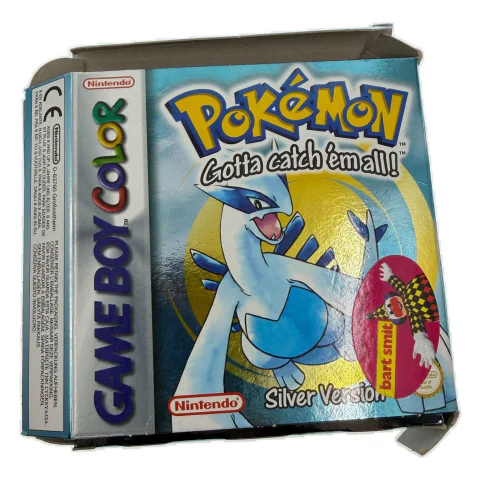
Pokemon Silver Version
€239.95Personally tested Fair condition
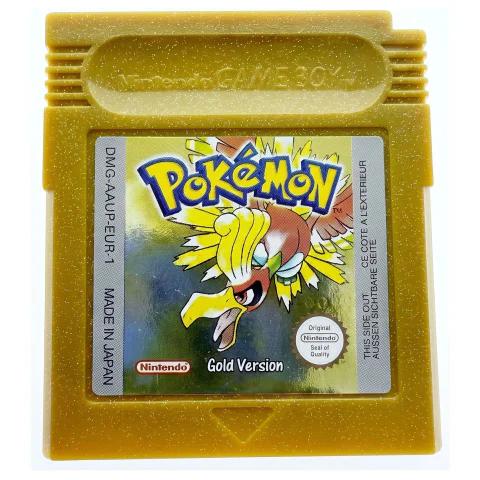
Pokemon Gold (poor condition)
€74.95Personally tested Fair condition
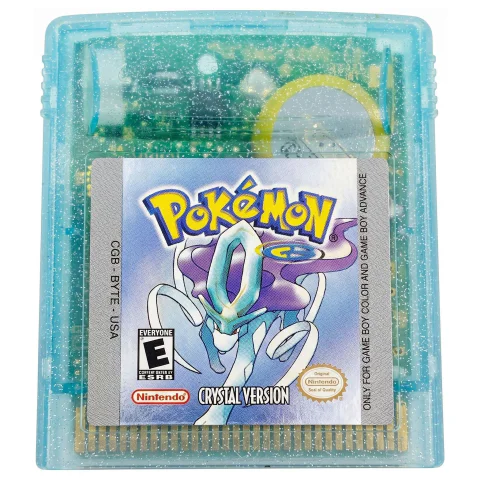
Pokemon Crystal (poor condition)
€159.95Personally tested Fair condition
Gold, Silver or Crystal?
Gold and Silver opened the generation and added things the series never dropped again: a day-and-night cycle, Pokémon eggs and breeding, held items, two new types — Dark and Steel — and, unique in the whole series, a second region: after Johto you travel on to Kanto from generation 1, with its own gym leaders. Sixteen instead of eight.
Between the two the split is the classic one: the cover legendary — Ho-Oh in Gold, Lugia in Silver — and version-exclusive Pokémon: Gligar, Mantine, Spinarak and Teddiursa in Gold, Delibird, Skarmory, Ledyba and Phanpy in Silver. A complete Johto Pokédex takes trading with the other version.
Crystal is the same adventure, completed: animated Pokémon sprites in every battle, an extended storyline around the legendary Suicune, and — a first for the series — the choice of a female player character. It arrived late in 2001, near the end of the Game Boy Color era, in a much smaller print run than Gold and Silver. That is why a loose Crystal is consistently the priciest of the six Game Boy Pokémon games on our own shelves, and the version collectors want.
The save battery — the one check that matters here
Generation 2 keeps your progress in SRAM powered by a CR2025 button cell inside the cartridge, and that cell does two jobs: the save and the in-game clock. After twenty-five years it is often flat. The game then still plays perfectly — but your progress is gone the moment you switch off, and day and night stop changing. On GBA and DS Pokémon a flat battery is a footnote; here it is the whole difference.
The cell is replaceable — it is soldered to the board, so it takes a soldering iron rather than a click, and an existing save does not survive the swap. We power every copy off, wait, check that the save is still there and state the result on the listing. Treat a flat battery as a price point, not a dealbreaker: it is a wear part, not a broken cartridge.
Which Game Boy plays them
Gold and Silver are dual-mode cartridges: colour on a Game Boy Color, Game Boy Advance or Advance SP, black-and-white on an original Game Boy or Pocket. Crystal is Game Boy Color-only and will not start on the original Game Boy or Pocket. None of the three play on the Game Boy Micro or on any Nintendo DS — those have no Game Boy slot. The Advance SP, with its lit screen, is the comfortable way to play a game from 2001; we keep tested Game Boy, Color and Advance consoles on the shelf for exactly that.
Real or fake
- The save test. Save, power off, restart. A working cell keeps the game; many counterfeit boards save badly or lose the save straight away.
- Label and weight. An original has a sharp, matte label and real heft; a fake is lighter and its print glossy or washed out.
- The screw and the shell. One 3.8 mm gamebit Nintendo screw on the back, and for Crystal the distinctive transparent ice-blue shell.
- The board inside. A real Nintendo PCB with a battery in its holder, not a single black blob on a green board.
Johto cartridges are among the most counterfeited Game Boy games there are. Those checks come straight from our full fake-cartridge guide — written from the roughly 12% of cartridges we reject when buying stock.
Originals or the DS remakes?
HeartGold and SoulSilver (Nintendo DS, 2010) are remakes of exactly these games: the same story and the same two regions, with modern graphics, every Pokémon up to generation 4 and the Pokéwalker pedometer — and flash saves, so no battery to worry about. Playing Johto for the first time, the remakes usually give you more. Looking for the Game Boy Color original, this is the page.
Buy one already tested
Johto cartridges reach us one at a time, so what is on the shelf changes — but every Gold, Silver or Crystal we list has been through the label, screw and board checks and a real save test on hardware, with the battery status stated. We have been doing this since 2019, with 1400+ verified reviews at 4.8★, and we ship tracked from the Netherlands to all 27 EU countries — no customs inside the EU.
Questions we get asked
Gold, Silver or Crystal — which one should I get?
Crystal if you only play one: the same story, but with animated sprites, an extended storyline around Suicune and, for the first time in the series, the choice of a female player character. Gold and Silver differ from each other only in a few version-exclusive Pokémon and the cover legendary — Ho-Oh in Gold, Lugia in Silver. Gold and Silver are the affordable way into Johto; Crystal is the one collectors want, and it is priced that way.
Does the save still work after all these years?
That is the question for this generation. Gold, Silver and Crystal keep your save in SRAM powered by a button cell inside the cartridge, and that cell does not last twenty-five years. When it goes flat the game still plays perfectly — but your progress is gone the moment you switch off, and the in-game clock stops, so day and night stop changing. We power every copy off, wait, and check the save is still there; what we measure is stated on the listing. A flat cell is a replaceable part, not a lost cartridge.
Can the battery be replaced?
Yes. It is a CR2025 button cell soldered to the board with tabs, so replacing it takes a soldering iron rather than a click. The existing save is lost in the process unless it is kept alive with a separate technique. Treat a flat battery as a price point, not a dealbreaker.
Which Game Boy plays Gold, Silver and Crystal?
Gold and Silver are dual-mode cartridges: colour on a Game Boy Color, Game Boy Advance or Advance SP, and black-and-white on an original Game Boy or Game Boy Pocket. Crystal is Game Boy Color-only — it needs a Game Boy Color, Advance or SP and will not start on the original Game Boy or Pocket. None of them play on the Game Boy Micro or on the Nintendo DS family, which have no Game Boy slot.
What is the difference between Gold and Silver?
The story and region are the same. You choose on the cover legendary — Ho-Oh in Gold, Lugia in Silver — and on version-exclusive Pokémon: Gold has Gligar, Mantine, Spinarak and Teddiursa among others, Silver has Delibird, Skarmory, Ledyba and Phanpy. A complete Johto Pokédex takes trading with a player of the other version.
Why are Gold and Silver so often called the best Pokémon games?
Because they are — together with their HeartGold and SoulSilver remakes — the only entries with two full regions: after Johto you travel on to Kanto from generation 1, with its own gym leaders — sixteen in total instead of eight. On top of that came the day-and-night cycle, eggs and breeding, held items and two new types, Dark and Steel. For a Game Boy cartridge that was an extraordinary amount of game.
What is the difference with HeartGold and SoulSilver?
Those are the Nintendo DS remakes from 2010 of exactly these games: the same story and the same two regions, with modern graphics, every Pokémon up to generation 4 and the Pokéwalker pedometer. Playing Johto for the first time, the remakes usually give you more; looking for the 1999 original on a Game Boy Color, you are in the right place.
How do I spot a fake Gold, Silver or Crystal?
Label print, weight and the screw: an original has a sharp, matte label, real heft, and a Nintendo 3.8 mm gamebit screw on the back. A fake is lighter, its label glossy or washed out, and it often saves badly or loses the save straight away. Crystal has its distinctive transparent ice-blue shell. The decisive test is saving — power off, restart, and the game must still be there. We run it on every cartridge.
Where Johto fits in the series: all Pokémon games in order — the generation before it, Red, Blue & Yellow, runs on the same Game Boy, and the full Pokémon Game Boy list has every title.
Dutch reader? Pokémon Gold & Silver kopen — dezelfde gids in het Nederlands.